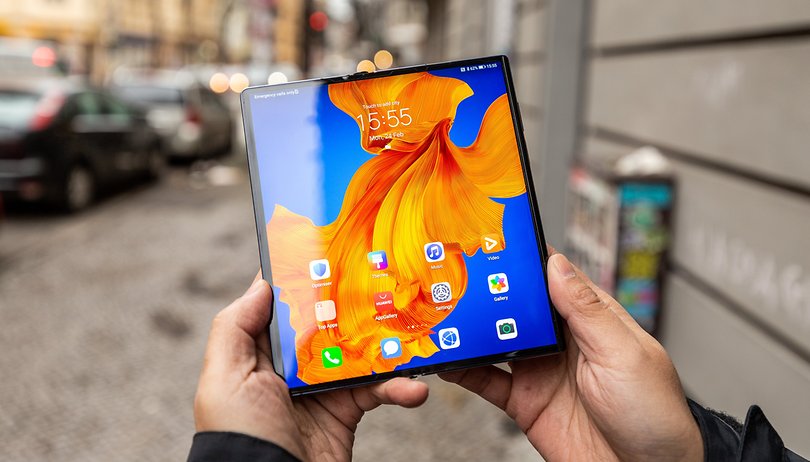
Last year, Huawei stole the show from all the other manufacturers at Mobile World Congress 2019 with the Mate X, a folding smartphone where the display was folded around the outside of the device. The Huawei Mate X was only sold in China. Now, the second generation, the Huawei Mate Xs, is to be used to serve the international markets. Whether the Huawei Mate Xs can keep up with the foldable competition despite the lack of Google services, we’ll find out for you in this first hands-on.
$ads={1}
Huawei Mate Xs release date and price
The big surprise is right before we get to the actual hands-on of the Mate Xs. Huawei will bring the folding smartphone onto the European markets as early as March. But Huawei really hikes the price, as at €2,499, the Mate Xs is €200 more expensive than the Mate X from last year. We will not see the Mate Xs in the wild in large numbers, that’s for sure.

Old design, new hinge
Visually, Huawei has hardly changed anything and if so, the changes have a practical reason. The hinge, for example, Huawei says it has revised and improved. Since the “Falcon Wing” hinge is made of more than one hundred interlocking parts along the entire length of the phone, and the fact that Huawei has chosen to place the display on the outside, there is no display crease here like on the Samsung Galaxy Fold.

But for this form factor, you need a longer period of acclimatization to internalize the reverse book folding. In the few minutes I was able to spend with the Huawei Mate Xs, I had to remind myself again and again to fold the display back. Somehow I had always had a bad feeling about it.

Folding up the display also requires a period of getting used to, as the display is held in place by a lock when folded. To unfold the smartphone, you have to press a button that requires a blind touch. Once you find the button and press it, the Mate Xs will pop up and you can now bend the display with a little bit of pressure.

A big, beautiful, and fragile display
If the Huawei Mate Xs is switched on and the display is activated, it is of course the star of the show. Even when folded, the 6.6-inch AMOLED panel with narrow display bezels is an eye-catcher. But the real WOW factor is only triggered when it is folded to a full 8 inches. As mentioned before, Huawei has no problem with a display crease as a result of putting the display on the outside. Thus, when swiping over the display every day, you won’t drive into a depression over the feel of it, or if the light falls unfavorably, you won’t see a crease in the display.

The only question is how robust the display is, as there is only a relatively soft and sensitive plastic layer on the large Huawei Mate Xs display. You should, therefore, pay close attention to where and how you transport the Mate Xs in everyday life.
Huawei is working hard to solve its Google problem
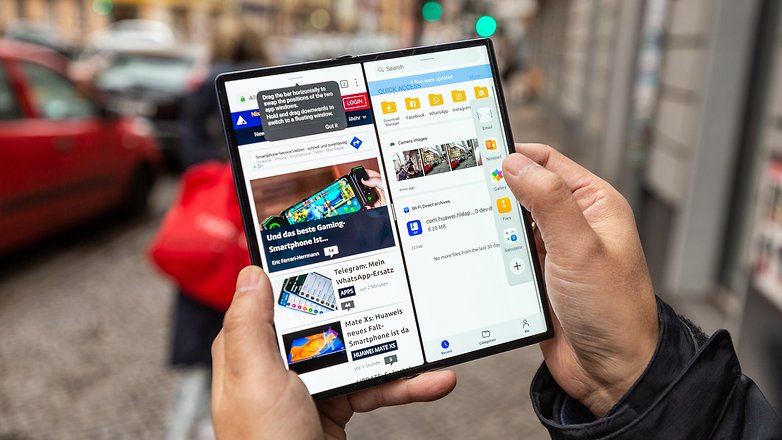
When it comes to software, you have to look at the Huawei smartphone from two angles. The Android operating system itself is open source. Huawei may continue to use it and does not violate the US trade embargo. What Huawei needs to compensate for, or if you want to paraphrase Huawei’s words, create an alternative to the Google services and develop its own app ecosystem. Here Huawei relies on Huawei Mobile Services (HMS), and its own AppGallery. Neither of these things needs to be reinvented by Huawei, but rather the system, which has been tested for years in its own home country, needs to be internationalized. Of course, local teams are increasingly used here, who are in direct contact with app developers and are assisting them with porting.
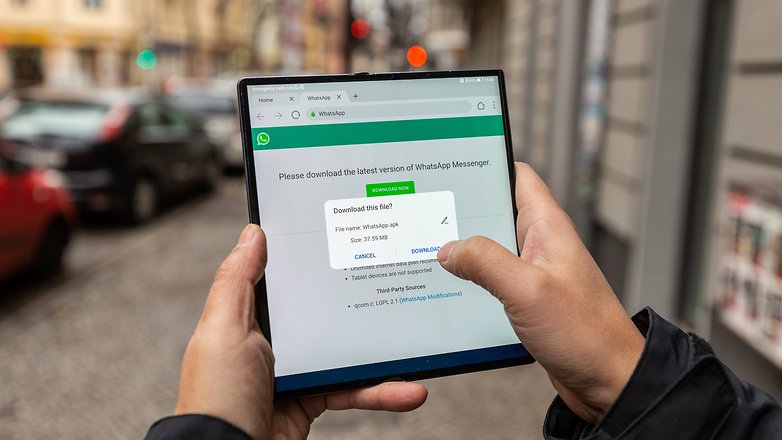
But Huawei is of course also aware that it is not possible without some app and service giants, such as Facebook and WhatsApp. For the time being, there is still a detour via an APK download of the respective manufacturer’s pages, but we were informed during the hands-on event in Berlin that Huawei is working hard to eliminate this detour by the time the P40 launches on March 26 in Paris. If this is successful, then Huawei Mobile Services, including AppGallery, can indeed be seen as an alternative to Google’s services.
More power on the inside
The biggest update compared to the Huawei Mate X from 2019 is on the inside of the Mate Xs. Huawei has drilled out everything here to the latest state of the art in-house chip technology. Instead of the two-chip combination of Kirin 980 and Balloon 5000 modem, the Huawei Mate Xs now features the Kirin 990 with an integrated 5G modem.The Kirin 990 then has 8 GB RAM and 256 GB of internal storage available, which can be expanded with the help of Huawei NM memory cards.
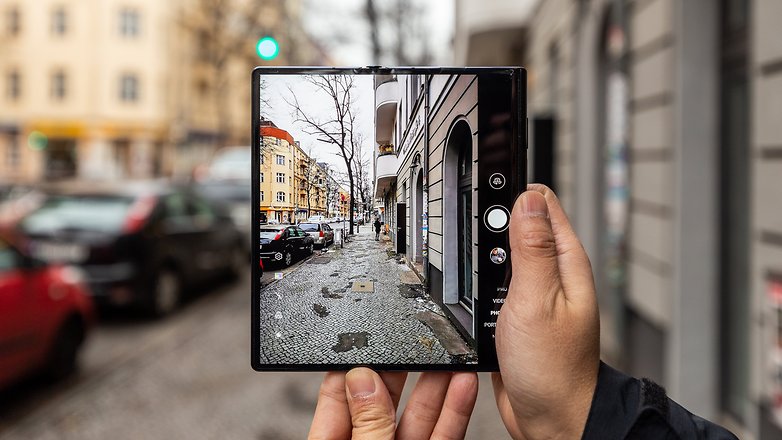
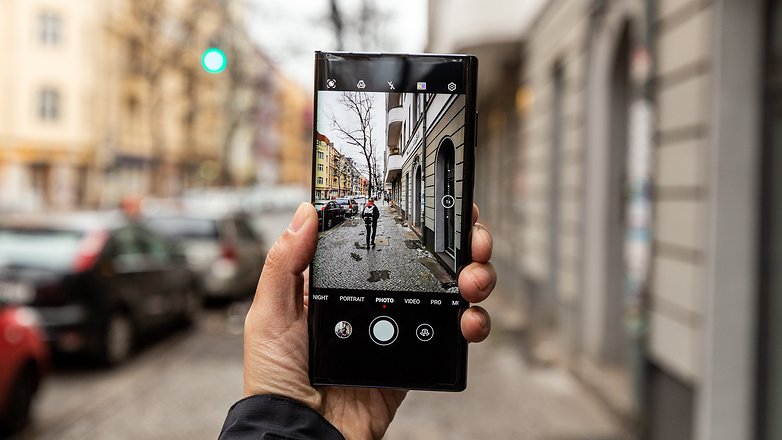
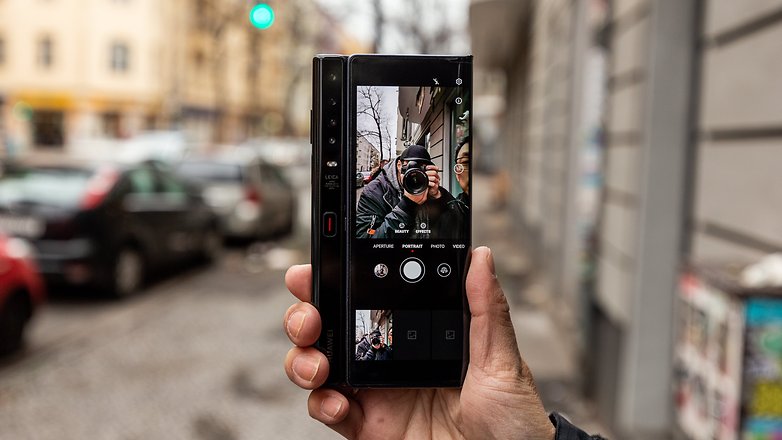
- 40 MP, f/1.8, 27mm wide-angle camera with PDAF
- 8 MP, f/2.4, 52mm telephoto camera
- 16 MP, f/2.2, 17mm ultra-wide-angle camera
- ToF Sensor for 3D depth information
Huawei Mate Xs technical specifications
| BATTERY SIZE: | 4500 mAh |
|---|---|
| SCREEN SIZE: | 8 in |
| REAR CAMERA: | 40 megapixels |
| ANDROID VERSION: | 10 – Q |
| USER INTERFACE: | Huawei EMUI |
| RAM: | 8 GB |
| INTERNAL STORAGE: | 512 GB |
| CHIPSET: | HiSilicon Kirin 990 |
| NUMBER OF CORES: | 8 |
| MAX. CLOCK SPEED: | 2.86 GHz |
| CONNECTIVITY: | HSPA, LTE, Bluetooth 5.0 |
